
 15 YEARS OF SERVICE

Your garage door opens every morning, closes every night, and may go months without giving you a reason to think about it. Then one day it starts rattling, hesitating, or sounding heavier than usual. At that point, should you schedule a garage door tune-up, ask for a safety inspection, or call for a repair?
Those services sound similar because they often start in the same place: a technician watches the door operate and checks the main components. The difference is what the technician is trying to accomplish.
The important question is not which service name sounds better. It is what condition your garage door is in right now.
Garage Door Tune-Up vs Safety Inspection: What Actually Changes?
Both services may include a look at the springs, cables, rollers, tracks, opener, sensors, and hardware. However, the goal of the visit changes how those findings are handled.
| Area | Garage Door Tune-Up | Safety Inspection |
|---|---|---|
| Main purpose | Maintain normal operation | Evaluate condition and safety |
| Best for | A door that works normally | A door with unknown or changing behavior |
| Lubrication | Often included | Only if appropriate |
| Minor adjustments | May be included | Recommended only after evaluation |
| Wear assessment | Basic | More detailed |
| Repair concerns | Not the main focus | Identified and prioritized |
| Safety testing | Included | Central part of the service |
| Final outcome | Preventive maintenance | Clear condition report and next step |
The overlap matters. A good technician should never start tightening, lubricating, or adjusting parts without first understanding how the door is moving. That first observation often determines whether the visit stays a tune-up or turns into a more detailed inspection.
What a Technician Looks for Before Doing Any Service
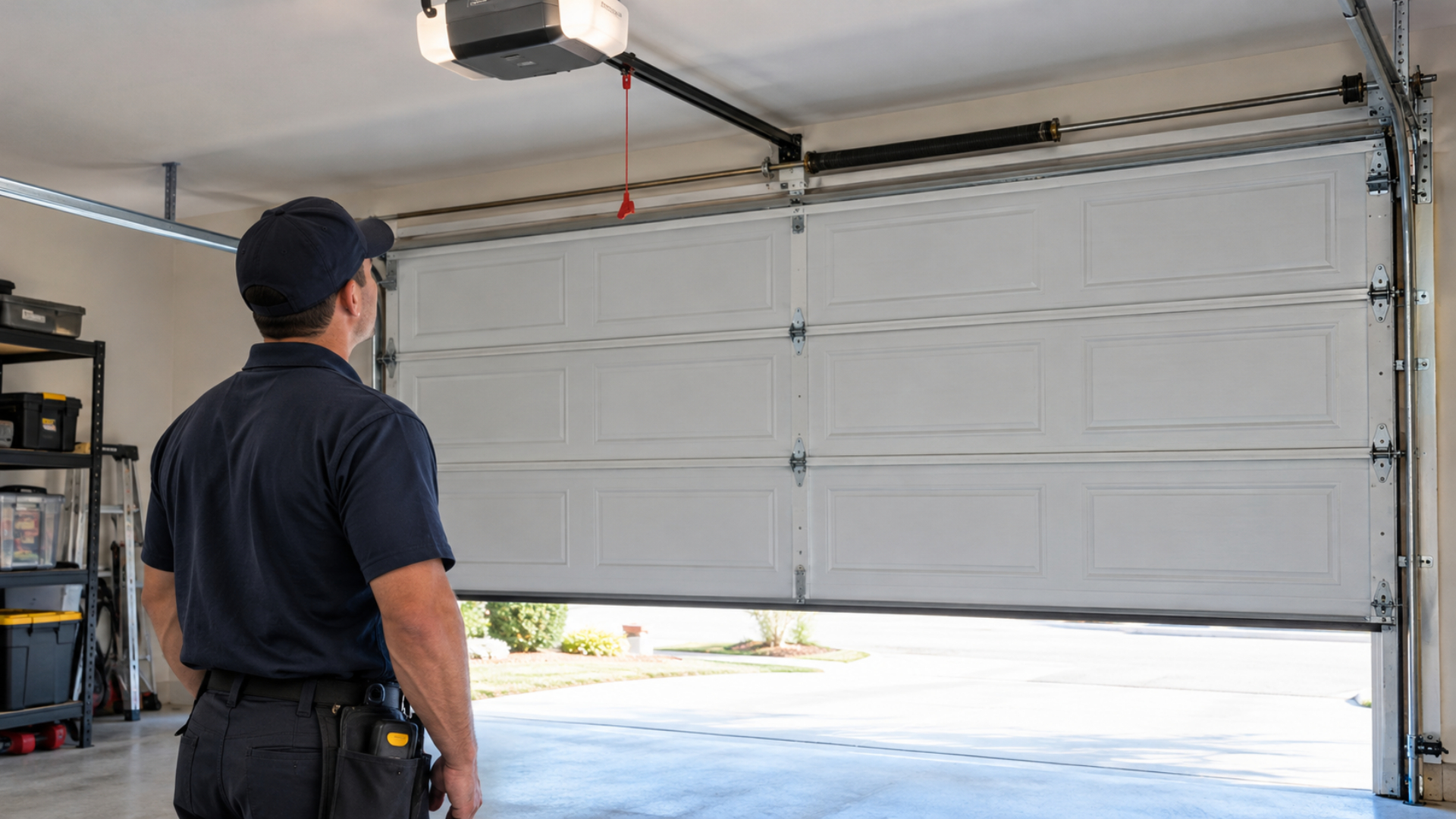
Before touching anything, the technician should watch the garage door complete a full cycle. That one step can reveal quite a lot.
The technician may look for:
- Uneven lifting from one side
- Shaking as the door moves through the tracks
- Rollers that hesitate or bind
- A door that feels unusually heavy
- Springs that no longer support the weight correctly
- An opener that sounds strained
- Excess movement in hinges or brackets
- Safety sensors that respond inconsistently
- A door that reverses without an obvious obstruction
This is where professional experience matters. A squeak alone may point to routine maintenance. A squeak combined with jerky movement and a worn roller tells a different story. Likewise, a loud opener may not have an opener problem at all if weak springs are forcing the motor to lift more weight than it should.
The goal is to understand the system before deciding what service it needs.
What a Garage Door Tune-Up Should Include
A garage door tune-up is most useful when the system still works well but needs routine care to stay that way. The goal is to reduce wear, keep movement smooth, and catch small issues before they turn into repairs.
A typical tune-up may include:
- Lubricating approved moving parts
- Tightening loose hardware
- Checking door balance
- Testing the opener
- Inspecting rollers, hinges, and tracks
- Testing the safety sensors and reversing system
The key is knowing where maintenance stops and repair begins. A roller that still moves freely may only need routine care, while a cracked or binding roller may need replacement. The same applies to springs, hinges, tracks, and opener parts.
A good tune-up should support healthy components, not try to adjust around a part that is already worn or damaged.
What a Garage Door Safety Inspection Should Reveal
A safety inspection should do more than confirm that the door still opens and closes. It should show how the main components are holding up, where wear is starting, and whether anything needs attention before it affects safety or reliability.
This is especially useful if you recently bought the home, do not know the system’s service history, or have noticed changes in noise, movement, or balance.
| Component | What the Technician Checks |
|---|---|
| Springs | Wear, damage, uneven support |
| Cables | Fraying, slack, corrosion |
| Rollers | Cracks, binding, excessive wear |
| Tracks | Damage, looseness, alignment |
| Hinges | Wear and secure mounting |
| Door balance | Whether the door stays properly supported |
| Opener | Noise, hesitation, or added strain |
| Safety sensors | Alignment and response |
| Reversing system | Proper response to an obstruction |
| Weather seals | Gaps, cracks, or deterioration |
The most useful part of the inspection is the priority it gives each finding. Some wear may simply need monitoring or routine maintenance, while other issues may call for repair sooner. That distinction helps homeowners understand what can wait, what should be serviced, and what needs prompt attention.
When a Garage Door Tune-Up Is Enough
Once an inspection shows that the main components are still in good condition, routine maintenance may be all the system needs. Not every squeak, rattle, or small change in sound points to a repair.
A garage door tune-up is usually a good fit when:
- The door opens and closes evenly
- The opener sounds normal
- Springs and cables show no visible damage
- The door does not feel unusually heavy
- Safety sensors respond consistently
- The system is simply overdue for maintenance
- You want preventive service before winter
For example, a garage door in Des Moines may still move smoothly but develop a light squeak after months of daily use. If the inspection shows no damage or balance problems, routine lubrication and minor maintenance may be enough.
The deciding factor is how the system behaves as a whole. If the door still moves smoothly, stays balanced, and shows no signs of damage, a tune-up can help keep it operating that way.
When You Need More Than a Tune-Up
The picture changes when the door no longer moves the way it should. If the system feels heavier, looks uneven, or starts acting unpredictably, routine maintenance is no longer enough.
Schedule an in-depth garage door inspection when you notice:
- One side of the door rises faster than the other
- The door feels heavier than before
- A cable looks loose or frayed
- A spring has a visible gap or damage
- The door shakes through part of its travel
- The opener struggles, stops, or reverses
- Rollers scrape or bind in the tracks
- The door no longer stays balanced
- Safety sensors behave inconsistently
These warning signs usually point to a problem that affects the door’s weight, movement, or safety. Lubrication or minor tightening may quiet the system for a while, but they will not correct the underlying issue.
For example, if a weak spring makes the door harder to lift, the opener has to work harder every time the door moves. Servicing the opener alone will not solve that load problem. The technician needs to address the spring system first, then confirm that the rest of the door is operating correctly.
Tune-Up, Inspection, and Repair Should Follow a Logical Order
Homeowners often think of tune-ups, inspections, and repairs as completely separate services. In reality, they usually work best as part of one logical process.
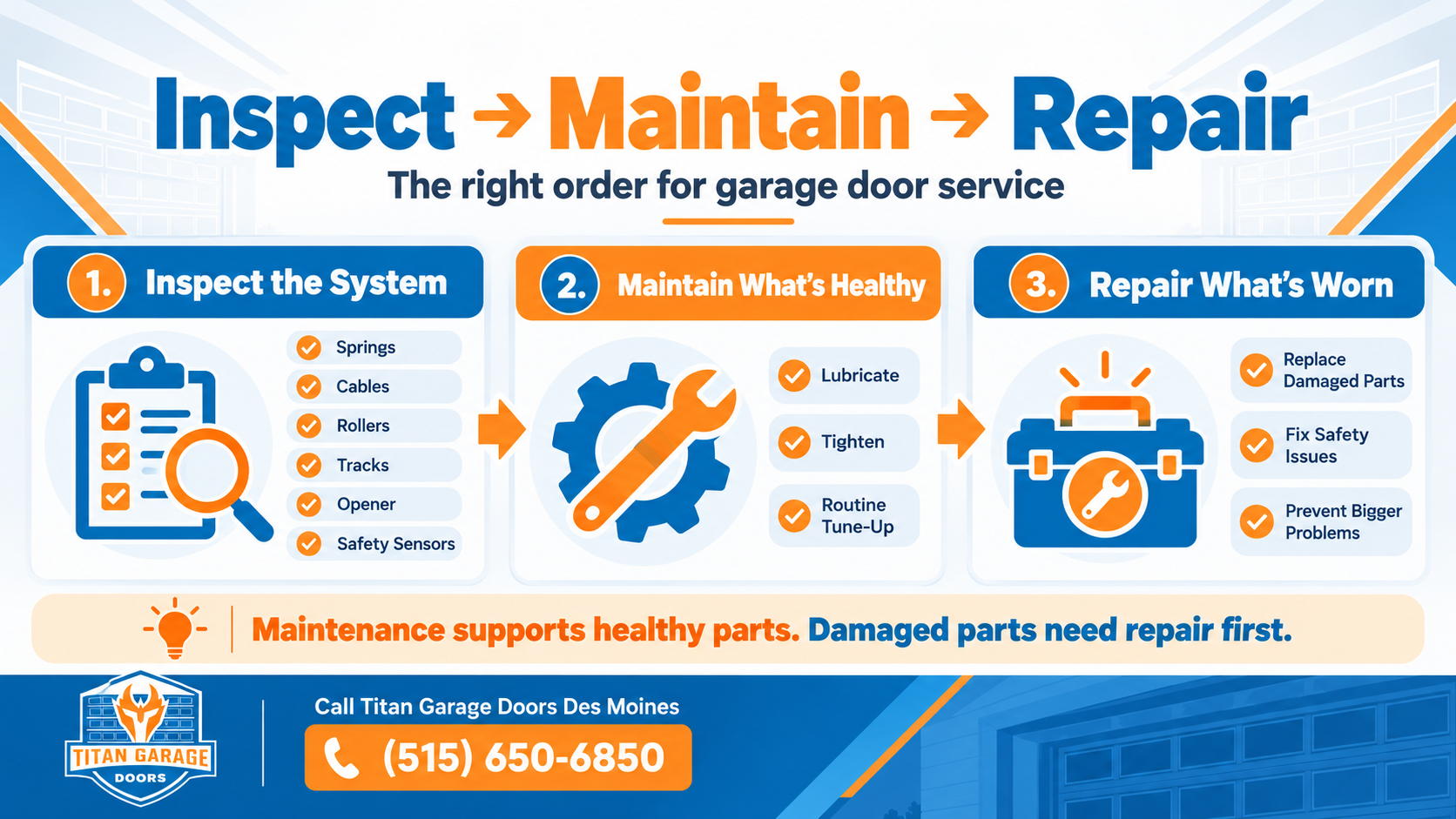
1. Start with the inspection. The technician first watches the door operate and checks the major components, including the springs, cables, rollers, tracks, opener, and safety system.
2. Maintain what is still in good condition. If the inspection shows that the system is generally healthy, the next step may be routine maintenance such as lubrication, minor tightening, and other tune-up work.
3. Repair what is worn or damaged. If the inspection uncovers a problem, the technician should explain what needs repair before moving forward. That way, the service addresses the actual issue instead of working around it.
This order matters because maintenance should support healthy parts, not hide failing ones. A tune-up cannot fix a broken spring, worn cable, or badly unbalanced door. Those issues need proper repair first.
FAQs About Garage Door Tune-Ups and Inspections
Homeowners often have a few practical questions after deciding which type of service they need. Here are some details that were not covered earlier.
How often should I schedule a garage door tune-up?
For many homes, having the system professionally checked and maintained about once a year is a reasonable starting point. Doors that see heavy daily use or have older components may benefit from more frequent attention.
How long does a garage door tune-up usually take?
A straightforward tune-up may take around an hour, although the visit can take longer if the technician finds unusual wear or a problem that needs further diagnosis.
Can a tune-up make a noisy garage door quieter?
Sometimes. Lubrication, loose hardware, or minor maintenance issues can contribute to squeaking and rattling. However, grinding, scraping, or loud popping may point to worn parts that need more than routine maintenance.
Does a newer garage door still need maintenance?
Yes. Newer systems still have moving parts, hardware, safety sensors, and an opener that benefit from routine checks. Regular maintenance can also help establish a baseline, making future changes easier to spot.
Can more than one garage door be serviced during the same visit?
Usually, yes. If your home has multiple garage doors, ask about having all of them checked during the same appointment. Each door should still receive its own inspection because wear can differ from one system to another.
Should I keep records of garage door service?
It is a good idea. Service records make it easier to track previous repairs, maintenance dates, and replaced parts. They can also give a future technician useful context when something changes.
Keep Your Garage Door Maintenance on the Right Track
The main difference between a garage door tune-up and a safety inspection comes down to the condition of the system. Routine maintenance works best when the door is healthy, while an inspection helps identify wear or safety concerns before anyone tries to adjust around them.
Timing also matters. If you are preparing your Des Moines home for colder weather, our guide on How to Build a Fall Garage Door Service Plan Before Iowa Winter walks through the seasonal checks worth making before freezing temperatures arrive. Combining that planning with the right professional service can help you head into winter with a clearer picture of what your garage door actually needs.
Schedule the Right Garage Door Service in Des Moines
You should not have to guess whether your door needs maintenance, a closer inspection, or an actual repair. Titan Garage Doors Des Moines can check the full system first and explain the next step based on what we find.
Our certified team will inspect the springs, cables, rollers, tracks, opener, balance, hardware, and safety system, then recommend only the garage door service that makes sense for the condition of your door.
Call Titan Garage Doors Des Moines at (515) 650-6850 to schedule expert garage door repair in Des Moines.