
 15 YEARS OF SERVICE

You press the garage door remote before leaving for work, and the door opens without a problem. Later that evening, you press the same button, and nothing happens. Then, five minutes later, it suddenly works again. Few garage door problems feel more frustrating than an opener you cannot trust. Indeed, an intermittent garage door opener may work perfectly one moment and refuse to respond the next.
Sometimes the problem comes from something simple, such as a weak remote battery or a blocked safety sensor. Other times, loose wiring, an overheating motor, or a failing logic board causes the opener to behave unpredictably. The tricky part is figuring out what changes between the times it works and the times it does not.
At Titan Garage Doors Des Moines, we usually start by looking for a pattern instead of immediately blaming the opener motor. When does the problem happen? Does the wall button still work? Does the opener fail after several cycles? Those small details can point us toward the real cause of an intermittent garage door opener.
Here’s how to narrow down the problem without taking apart anything dangerous.
Intermittent Garage Door Opener Problems: Start With the Pattern
Before you start replacing parts, pay attention to exactly how the opener fails. The pattern often tells you more than the failure itself.
Use these symptoms as a starting point:
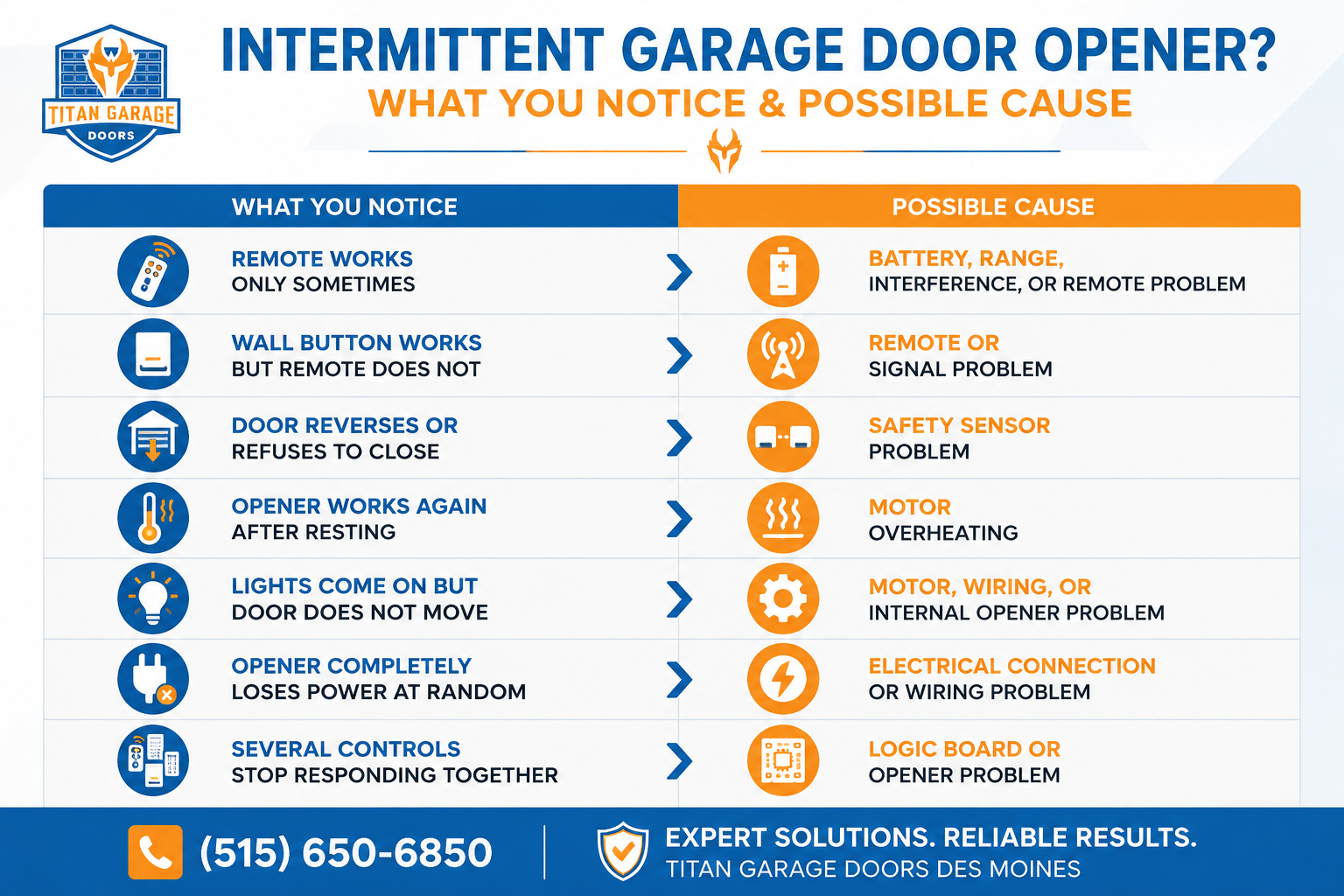
Don’t worry if you cannot identify the cause from this table alone. The goal is simply to notice whether the problem affects one control, one direction of travel, or the entire opener. Once you know that, garage door opener troubleshooting becomes much easier.
Garage Door Remote Troubleshooting Comes First
If the garage door works from the wall control but not from your handheld remote, start with the remote. A weak battery can create confusing symptoms. The remote may work while your car sits close to the garage and then fail from the end of the driveway. It may also work one morning and struggle later that day.
Start by replacing the battery with the correct type. Then test the remote from several distances. You should also check whether another remote works normally. If one remote fails while the others continue working, you have narrowed the intermittent garage door opener problem considerably.
Signal interference can also affect the remote. Certain LED bulbs and nearby electronics can interfere with the signal between the remote and opener. If the problem started after you changed a garage light bulb or added new electronics nearby, that timing may provide an important clue.
For basic garage door remote troubleshooting, check:
- The remote battery
- The distance from the garage
- Other remotes in the household
- Recently installed LED lights
- Whether the wall control still works
If every remote starts failing at the same time, the problem may sit inside the opener rather than inside the remotes.
Garage Door Sensor Problems Can Cause Random Closing Issues
Safety sensors sit near the bottom of the garage door tracks and watch the doorway while the door closes. When they detect an obstruction or lose alignment, the opener may stop or reverse the door. That behavior can feel intermittent.
For example, one sensor may shift slightly when the track vibrates. Bright sunlight may also affect some sensor setups during certain parts of the day. A loose connection can make the sensors work one moment and lose communication the next.
Look at the indicator lights on both sensors. They should usually remain steady rather than flicker. You can safely:
- Remove leaves, boxes, or other objects from the doorway.
- Wipe dust from the sensor lenses.
- Check whether either sensor looks visibly crooked.
- Watch the indicator lights for flickering.
However, avoid rewiring or moving brackets if you are unsure how the system works. Professional garage door sensor replacement may become necessary when the sensors lose power, wiring becomes damaged, or alignment problems keep returning.
Loose Wiring Can Make a Garage Door Opener Stop Randomly
Garage door openers depend on several low-voltage wires that connect the wall control, safety sensors, and opener unit. Over time, vibration can loosen a connection. Wires can also become damaged near staples, brackets, or areas where homeowners store tools and other items.
A loose wire creates exactly the type of problem that drives homeowners frustrated. The opener works, and then it doesn’t. A little vibration changes the connection, and suddenly it starts working again.
You may suspect wiring when:
- The wall button loses power occasionally.
- Sensor lights flicker.
- The opener responds after vibration or movement.
- Controls stop working without a clear pattern.
- The problem affects several parts of the system.
You can look for obviously loose or damaged wires, but do not remove the opener cover or work around electrical connections unless you have the proper training. An opener that randomly loses power deserves a professional garage opener service, especially when you smell burning plastic or notice damaged wiring.
Garage Door Opener Motor Overheating After Frequent Use
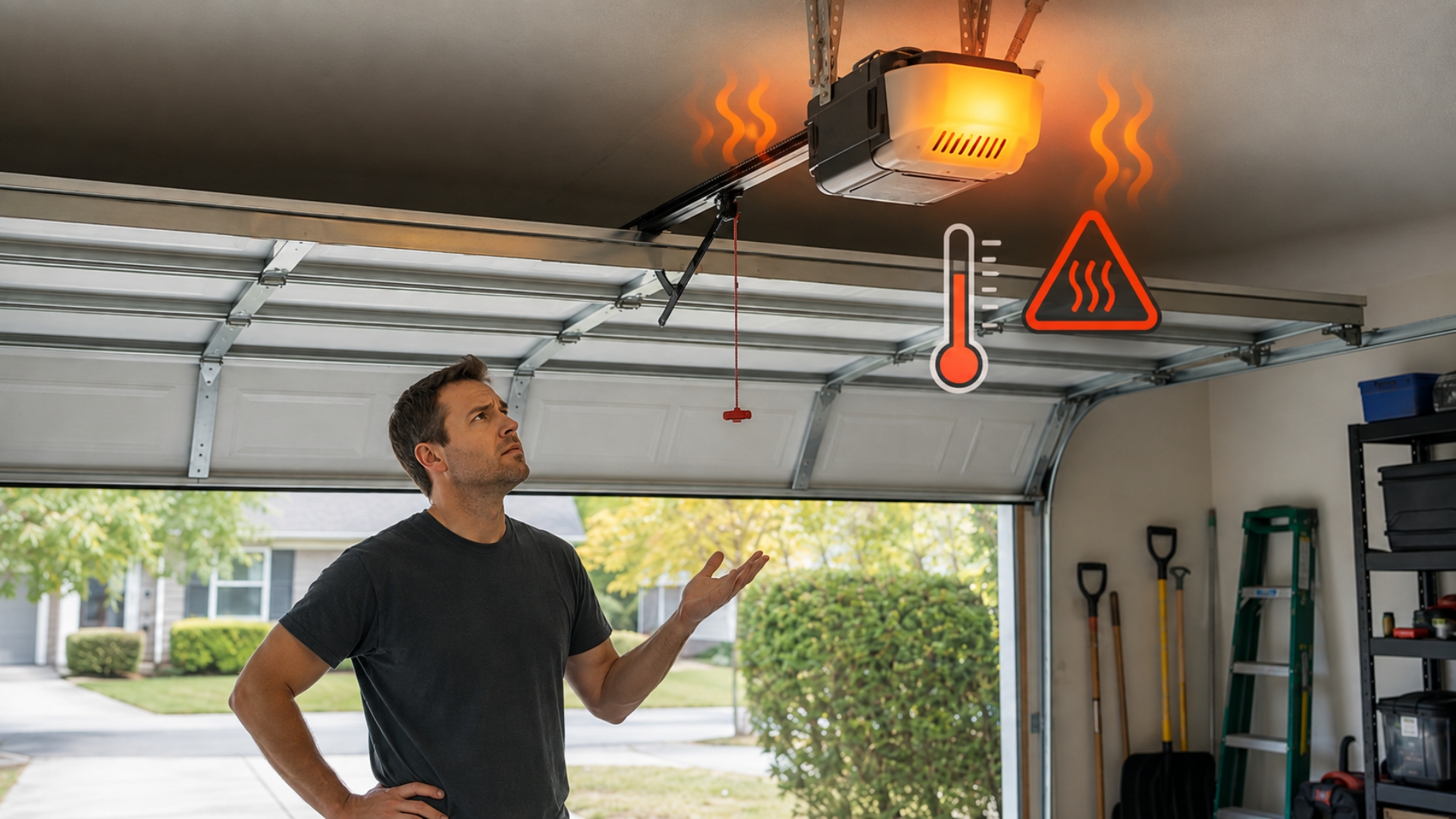
If your garage door opener stops after several cycles but works again after cooling down for 20–30 minutes, the motor may be overheating. Hot Des Moines summer weather can make this problem more noticeable, especially when your garage serves as the main entrance.
Common reasons an opener overheats include:
- An aging motor that creates more heat during operation
- Weak springs that make the opener lift extra weight
- Worn rollers that add resistance as the door moves
- Poor door balance that forces the motor to work harder
- Damaged tracks that prevent smooth travel
Frequent use may expose the problem, but it is not always the true cause. Replacing the opener without fixing added resistance from the garage door can put the same strain on a new motor.
For more details, read our related guide on how to know if your garage door opener is straining. If overheating keeps happening, have a technician inspect both the opener and the door system.
Logic Board Problems Can Create Unpredictable Opener Behavior
The logic board acts like the control center inside the garage door opener. It receives signals from the remote, wall control, and safety system and tells the opener what to do.
When this board begins failing, the symptoms may seem random. The opener might ignore the remote, respond several seconds late, activate inconsistently, or stop communicating with controls that previously worked well.
Logic board problems can also result from age, electrical damage, moisture, or component failure. Because several other problems can create similar symptoms, a technician should test the system before replacing the board.
Safe Garage Door Opener Troubleshooting at Home
You can perform several simple checks before scheduling service. These checks help rule out common causes without opening the motor housing or touching the spring system:
- Test the wall button. If the wall control works while the remote fails, focus on the remote and signal first.
- Replace the remote battery. A weak battery can create inconsistent range and response.
- Watch the safety sensor lights. Look for blinking, flickering, or one sensor with no light.
- Clear the sensor area. Remove objects and gently clean the lenses.
- Listen during operation. Humming, grinding, clicking, or sudden silence can help identify the source.
- Notice when the problem happens. Does the opener fail only after several cycles or during the hottest part of the day?
- Check for visible wiring damage. Look only. Do not start disconnecting electrical components.
- Give an overheated opener time to cool. If it repeatedly stops after frequent use, stop operating it and schedule an inspection.
These observations can help a certified Titan technician identify the cause more efficiently, making it easier to recommend the right repair.
When Intermittent Opener Problems Need Professional Repair
One random failure does not always mean the opener needs replacement. Repeated failures tell a different story.
Schedule professional garage door opener troubleshooting when the opener:
- Stops responding several times each week
- Works again only after cooling down
- Randomly loses power
- Has flickering sensor lights
- Makes unusual motor noises
- Smells hot or electrical
- Ignores multiple remotes
- Stops or reverses without an obvious obstruction
Homes in Beaverdale, Waveland Park, Sherman Hill, the East Village, and throughout Des Moines can experience the same opener issues. The important part is finding the cause before the system leaves your vehicle trapped inside the garage on a busy morning.
Garage Door Opener Repair vs Replacement in Des Moines
An intermittent problem does not always mean you need a new opener. A quick comparison can help you understand which option may make more sense.
| Repair May Make Sense | Replacement May Make More Sense |
|---|---|
| Opener is relatively new | Opener is older and unreliable |
| One clear issue is causing the problem | Several parts show wear |
| Sensors, wiring, or remote need service | Motor keeps overheating |
| Replacement parts are available | Parts are hard to find |
| Rest of the system works well | Repairs keep adding up |
At Titan Garage Doors Des Moines, we inspect the opener and garage door system first so the recommendation is based on the actual problem, not guesswork.
If replacement looks like the better option, cost is usually the next question. Read our guide on opener motor replacement cost in Des Moines to see what can affect pricing and when a full opener replacement may make more sense than a major motor repair.
FAQs About Intermittent Garage Door Openers
Here are a few additional questions Des Moines homeowners often have when their garage door opener works inconsistently:
Can a power outage affect how my garage door opener works afterward?
Yes. A power interruption or surge can sometimes reset opener settings or affect electronic components. If the opener starts acting differently after an outage, it may need to be reprogrammed or professionally checked.
How long should a garage door opener normally last?
Many garage door openers can provide roughly 10 to 15 years of service, although usage, maintenance, door condition, and opener quality all affect lifespan. Frequent problems on an older unit may be a sign that replacement deserves consideration.
Can cold Des Moines weather affect a garage door opener?
Cold weather in Des Moines can make existing problems more noticeable. Thickened lubricant, stiff moving parts, weak batteries, or a garage door that becomes harder to move can all put extra demand on the opener during Iowa winters.
Can a smart garage door opener help identify intermittent problems?
Some smart garage door openers and connected apps provide activity history or notifications that show when the door opens, closes, or fails to complete an action. That information can help you recognize a pattern, but it does not replace a physical inspection.
Should I unplug an opener that keeps malfunctioning?
If you notice a burning smell, smoke, unusual heat, or obvious electrical damage, stop using the opener and disconnect power only if you can do so safely. Avoid opening the motor housing or attempting electrical repairs yourself.
Get Reliable Garage Door Opener Repair in Des Moines
You shouldn’t have to press the remote and wonder whether your garage door will respond this time. Titan Garage Doors Des Moines can inspect the remotes, sensors, wiring, motor, opener controls, and garage door itself to find what is causing the intermittent operation. Our technician will explain the problem clearly and recommend the repair that makes sense for your system. If replacement becomes the better option, we can also help you compare available garage door openers and discuss monthly payment plans without pushing features you don’t need.
Call Titan Garage Doors Des Moines at (515) 650-6850 to schedule a free consultation on garage door opener repair and maintenance in Des Moines.