
 15 YEARS OF SERVICE


Fall in Des Moines can feel forgiving. The garage door opens normally, the weather is comfortable, and winter still seems a few weeks away. Then the first stretch of freezing weather arrives, and suddenly the door sounds louder, the bottom seal feels stiff, or the opener seems to work harder than usual. That is why fall is a smart time to build a garage door service plan.
You do not need to wait for the door to stop working. A little planning before Iowa winter can uncover worn rollers, weak seals, dry moving parts, spring problems, and opener strain while the weather still makes repairs easier to schedule.
At Titan Garage Doors Des Moines, we recommend looking at the entire garage door system rather than focusing on one noisy part. The door, springs, rollers, tracks, seals, and opener all depend on each other. When one part starts struggling, another part often has to work harder.
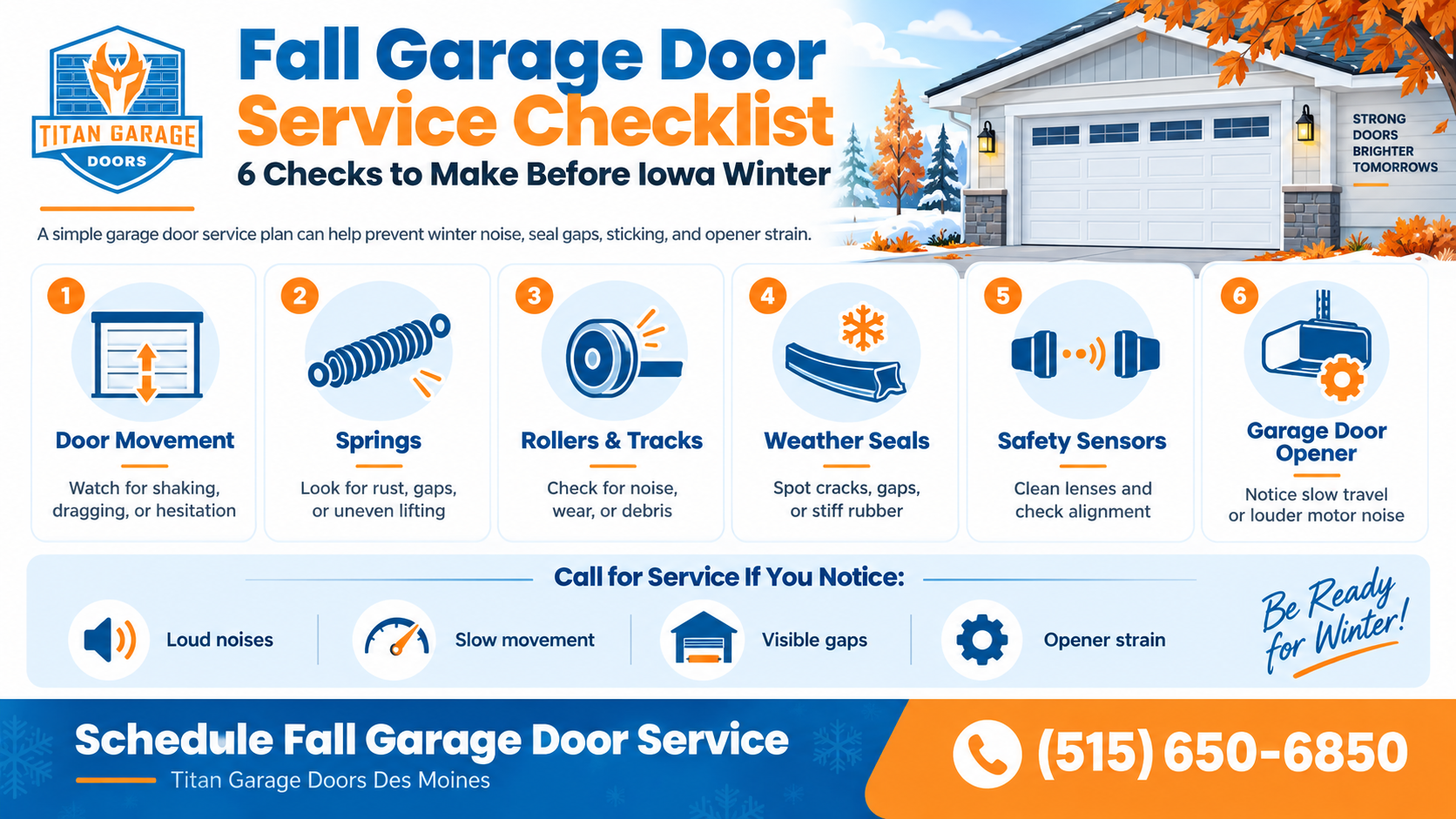
Fall Garage Door Service Plan at a Glance
You do not need a long maintenance list taped to the garage wall. Focus on the areas that affect safe movement, weather protection, and reliable winter operation.
| Fall Check | What to Look For | Why It Matters Before Winter |
|---|---|---|
| Door movement | Shaking, dragging, hesitation | Resistance can strain other parts |
| Springs | Rust, gaps, uneven lifting | Springs support the door’s weight |
| Rollers and tracks | Noise, wear, debris | Smooth travel reduces resistance |
| Weather seals | Cracks, gaps, stiffness | Helps block drafts, water, and debris |
| Hardware | Loose hinges or brackets | Keeps movement steady |
| Opener | Slow travel, unusual noise | May reveal added strain |
| Safety sensors | Dirty lenses or poor alignment | Helps the door close safely |
Think of this table as the foundation of your garage door service plan. The next step is knowing what deserves closer attention.
1. Start With Your Garage Door Service Plan with Movement Check
Before cleaning, lubricating, or adjusting anything, watch the garage door complete a full opening and closing cycle.
Stand safely inside the garage and pay attention to the movement. Is the door rising evenly, or does it shake halfway up? Does one side move slower than the other? Has the opener become louder than it was during summer? A healthy door should move in a controlled, consistent way.
Watch for:
- Jerking or shaking
- Scraping sounds
- Sudden changes in speed
- A door that hangs unevenly
- Grinding or popping noises
- An opener that sounds strained
These signs do not always mean you need a major garage door repair. However, they give you a reason to inspect the system before temperatures drop further.
For homeowners in Beaverdale, Waveland Park, Sherman Hill, and other Des Moines neighborhoods, fall is a practical time to catch these changes before snow, ice, and freezing temperatures become part of the daily routine.
2. Check Garage Door Springs Before Cold Weather
Springs do much of the heavy lifting every time the garage door moves. Your opener guides the door, but it should not carry the full weight by itself. That makes the spring system an important part of seasonal garage door maintenance.
Look at the springs from a safe distance. You may notice rust, a visible gap in a torsion spring, uneven movement, or a garage door that suddenly seems much heavier. Do not touch, tighten, or adjust garage door springs yourself. Springs hold strong tension and can cause serious injury when handled incorrectly.
If the door feels unusually heavy or struggles to rise evenly, stop there and schedule professional garage door service. A weak or damaged spring can place unnecessary pressure on the opener and other moving parts.
3. Inspect Rollers, Tracks, and Hinges for Smooth Movement
Your garage door travels through the same path hundreds of times throughout the year. By fall, dirt, worn rollers, loose hinges, or minor track problems may already affect how smoothly it moves.
Look along both sides of the door. You can remove leaves, cobwebs, and loose debris from around the tracks, but avoid forcing or bending the tracks yourself. Also, do not put your fingers near rollers while the door operates.
Pay attention to squeaking, rattling, or scraping. A roller that no longer turns properly creates resistance every time the door moves.
Loose hinges can also make the door sections shift or rattle. If you see damaged rollers, bent tracks, or hardware pulling away from the door, professional garage door repair in Des Moines may be safer than trying to straighten or replace parts yourself.
Smooth movement matters even more heading into winter because the opener should not have to fight against unnecessary resistance.
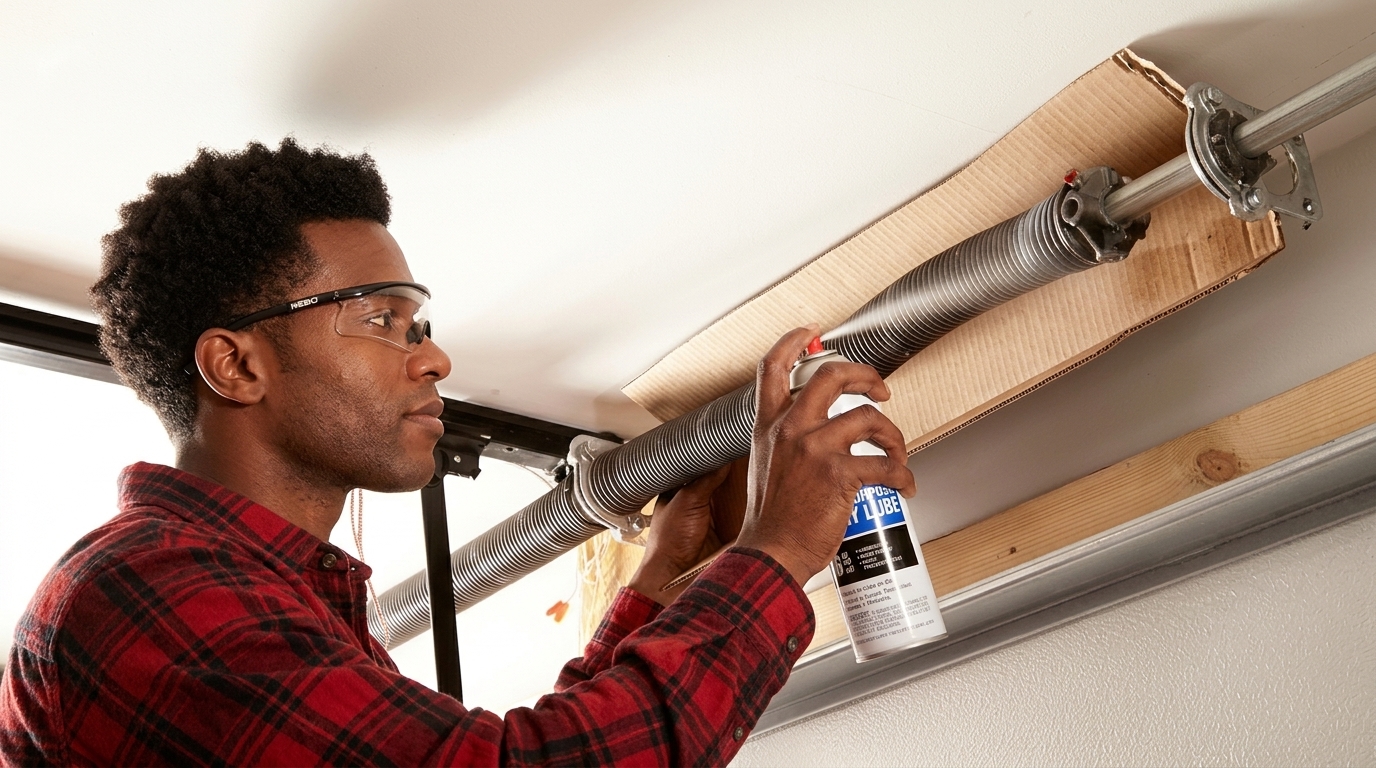
4. Add Lubrication to Your Fall Garage Door Service Plan
Dry moving parts often become easier to hear as temperatures change. If the door already squeaks or sounds rough in September or October, winter probably will not make it quieter.
Proper lubrication can help moving components operate more smoothly. Your garage door service plan should include checking areas such as rollers, hinges, and approved spring surfaces when appropriate for your door. Always use a garage-door-safe lubricant and follow the manufacturer’s recommendations for the specific system.
However, avoid spraying lubricant randomly over tracks or electrical components. More product does not mean better maintenance.
If you are unsure which parts should receive lubrication, let a technician handle this step during seasonal service. The goal is smooth movement, not a greasy garage door.
5. Inspect the Bottom Seal and Weatherstripping
The weather seals become much more noticeable once cold air starts pushing into the garage.
Check the rubber seal along the bottom of the door. It should contact the floor across the width of the opening without large gaps. Look for cracking, flattening, missing sections, or areas that have become hard and brittle. Then inspect the weatherstripping around the sides and top.
Damaged seals can allow:
- Cold drafts
- Windblown debris
- Rain or melting snow
- Small leaves and dirt
- More temperature changes inside the garage
Homes with attached garages can especially benefit from keeping the opening properly sealed.
You do not need to wait until you feel cold air around the door in January. Adding seal inspection to your fall garage door maintenance routine gives you time to correct gaps before winter.
6. Test the Garage Door Opener Before Winter
The opener often gets blamed when a garage door slows down, but the opener may simply be reacting to resistance elsewhere in the system.
Run the opener and listen. Has the motor become louder? Does the door hesitate before moving? Does it stop midway or seem slower than it did a few months ago? Those changes deserve attention.
Fall is also a good time to test your remote controls and replace weak batteries. If you use a smart garage door opener, confirm that your app, WiFi connection, and alerts still work properly. For the safety system, keep the sensor lenses clean and make sure nothing blocks the doorway.
If the opener repeatedly struggles, do not increase its force setting just to make the problem disappear. Weak springs, worn rollers, poor balance, or track resistance may be creating the extra workload.
A complete garage door service plan checks both the opener and the door it has to move.
7. Clear the Garage Door Area Before Snow Arrives
This step takes only a few minutes, but homeowners often overlook it. Clear leaves, dirt, tools, boxes, and other objects from the area around the tracks and garage door opening. Make sure nothing sits in front of the safety sensors.
Also look at the floor where the bottom seal meets the concrete. Standing water near the threshold can become more troublesome once temperatures fall below freezing. Keeping the area clean gives the door a better chance of closing against a clear surface.
During Iowa winters, avoid forcing the garage door open if the bottom seal appears frozen to the ground. Forcing it can damage the seal or place extra strain on the opener.
8. Schedule Garage Door Service Before the Winter Rush
A fall garage door service plan works best when you act on the warning signs you find. If your door already shakes, sticks, makes loud noises, leaves visible gaps, or puts extra pressure on the opener, waiting for freezing weather rarely makes the situation more convenient.
Preventive service gives a technician a chance to inspect the springs, rollers, tracks, hinges, seals, safety system, and opener before a small issue becomes a winter breakdown. It also gives you time to ask questions and plan repairs rather than dealing with a garage door that suddenly will not open on a freezing morning.
Fall Garage Door Maintenance: What You Can Check vs. What Needs a Pro
Some fall garage door maintenance is safe for homeowners to handle. Other tasks involve high-tension parts or adjustments that can become dangerous without the right tools and training.
| Safe Homeowner Checks | Call a Professional For |
|---|---|
| Watch the door open and close | Spring repair or adjustment |
| Clean safety sensor lenses | Cable repair or replacement |
| Remove leaves and debris | Track realignment |
| Check weather seals for gaps | Roller replacement |
| Replace remote batteries | Door balance correction |
| Listen for new noises | Opener motor or electrical repair |
A simple rule helps: if the job involves springs, cables, door balance, or major hardware adjustments, leave it to a trained and certified technician. You can still spot the warning signs during your fall inspection, but professional service is the safer way to correct them before winter.
Schedule Your Seasonal Garage Door Service Today
If your fall inspection reveals unusual noise, slow movement, worn rollers, damaged seals, spring issues, or opener strain, Titan Garage Doors Des Moines can perform a full system check and explain exactly what needs attention.
Our expert team provides professional garage door maintenance and repair in Des Moines, with clear recommendations based on your door’s condition. And if a larger repair or replacement is needed, we offer flexible payment plans so protecting your home doesn’t strain your budget.
Call Titan Garage Doors Des Moines at (515) 650-6850 today to schedule fall garage door service before Iowa’s winter puts your system to the test.