 HAVE ANY QUESTIONS?
 15 YEARS OF EXPERIENCE

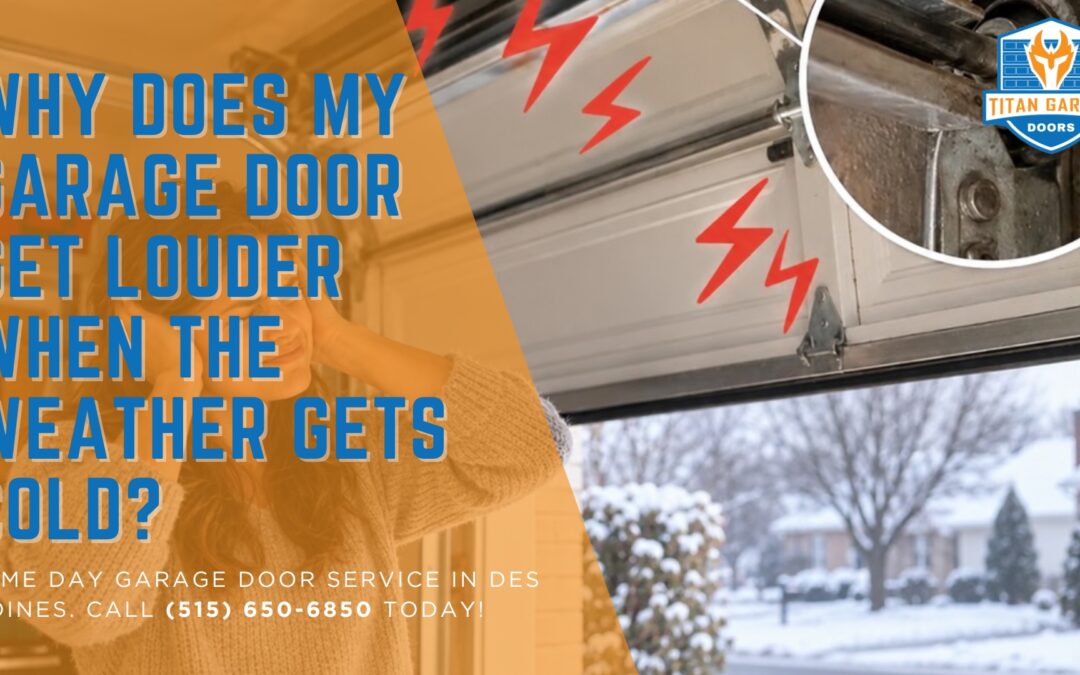
Is your garage door getting louder as the temperature drops? Maybe it squeaks first thing in the morning, rattles halfway up, or suddenly makes the opener sound like it is working much harder than it did a few weeks ago.
Cold weather in Des Moines can make existing friction, worn parts, stiff seals, and balance problems easier to notice. That does not always mean something has suddenly broken. In many cases, winter simply exposes wear that was already developing. Some noises have fairly simple fixes. Others tell you that a roller, spring, track, or opener needs closer attention.
At Titan Garage Doors Des Moines, we look at the sound together with the way the door moves. Where does the noise start? Does it happen throughout the cycle or only in one spot? Has the door also become slower, heavier, or uneven? Those clues can help separate routine maintenance from a developing repair.
Garage Door Getting Louder? Match the Sound to the Likely Cause
Before reaching for lubricant, listen closely. Different noises often point toward different parts of the system.
| What You Hear | Likely Cause | What You Can Do |
|---|---|---|
| Squeaking | Dry rollers or hinges | Inspect and lubricate approved moving parts |
| Rattling | Loose hardware or worn hinges | Have hardware checked if movement also changes |
| Rubbing near the floor | Stiff or frozen weather seal | Clear ice and inspect the seal |
| Scraping | Roller or track problem | Stop forcing the door and inspect the area |
| Grinding | Worn roller, bearing, or opener component | Schedule professional service |
| Loud motor hum | Door resistance or opener strain | Watch door movement and schedule an inspection if it slows |
| Loud pop or bang | Possible spring failure | Stop using the door and call for repair |
The sound gives you a starting point, but the door’s movement tells you whether the problem may be more serious.
1. Squeaking Often Starts With Dry Rollers or Hinges
A high-pitched squeak usually points to friction between moving parts. Rollers and hinges move every time the door opens. If their lubrication has dried out or the parts have started wearing, colder temperatures can make that friction much easier to hear.
What You Can Try
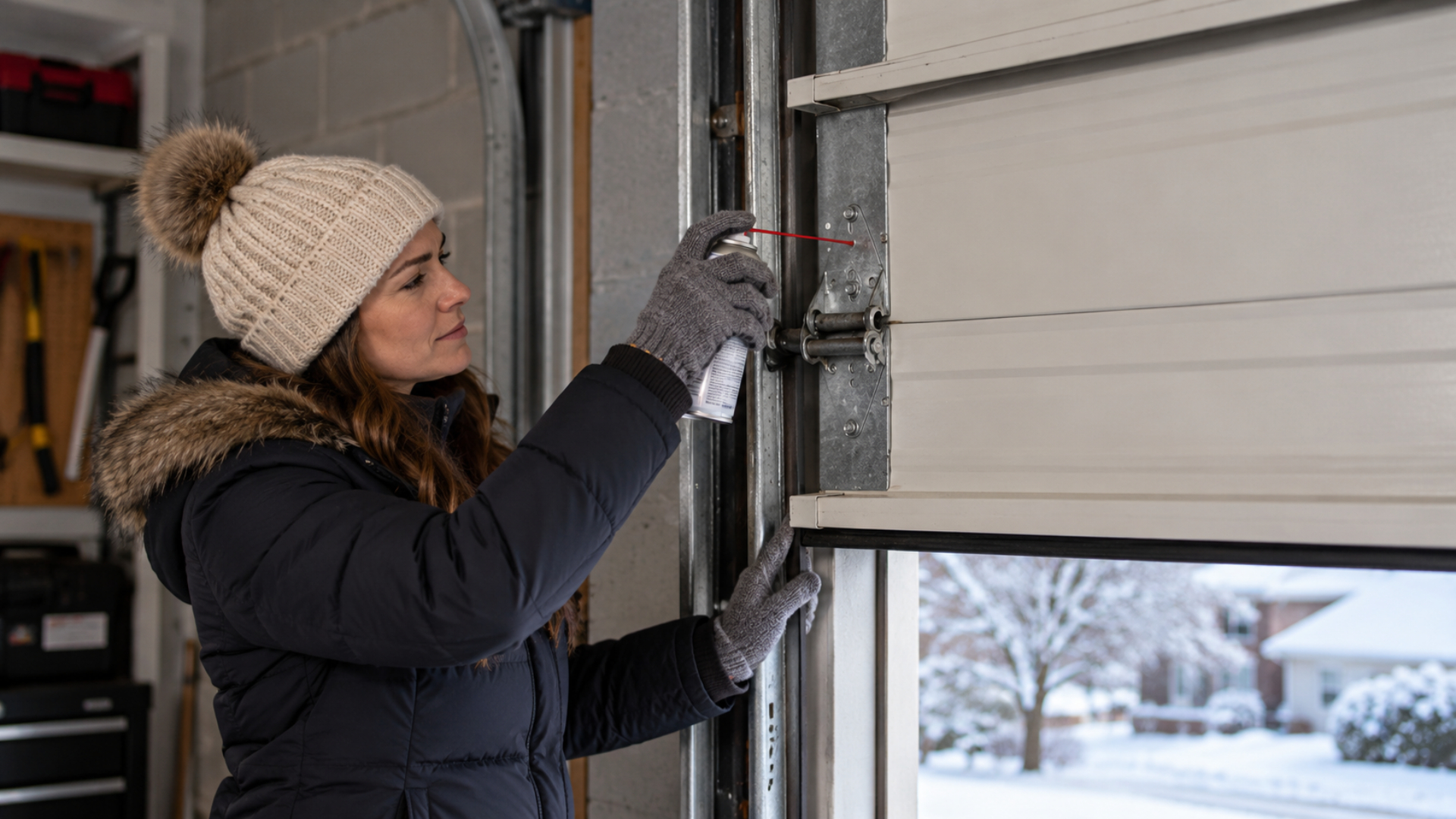
Watch the rollers and hinges from a safe distance while the door completes one cycle. If they move smoothly and you see no obvious damage, proper garage door lubrication may reduce the noise. Use a lubricant made for garage door components and follow the manufacturer’s recommendations. Avoid covering the tracks with heavy grease. The rollers need a clean path to travel through.
If a roller wobbles, binds, cracks, or stops turning freely, lubrication is no longer the answer. That part may need professional attention.
2. Rattling Can Point to Loose or Worn Hardware
A garage door contains hinges, brackets, fasteners, and other hardware that experience vibration during every cycle. Over time, normal use can create movement between components. When your garage door starts getting louder in colder weather, an existing rattle may become much easier to notice.
What You Can Try
Listen for where the sound originates. Does it come from one section of the door, the opener rail, or one side of the tracks? You can visually check for obvious looseness, but avoid tightening every fastener you see. Some hardware connects to high-tension components or affects door alignment.
If the door still travels evenly and the noise remains mild, routine garage door maintenance may be enough. Rattling combined with shaking, crooked movement, or hesitation deserves a professional inspection.
3. Stiff or Frozen Weather Seals Can Create Rubbing Sounds
The bottom seal and weatherstripping around your garage door need enough flexibility to move against the floor and frame. Older rubber can become stiffer as temperatures drop. Snow or moisture can also freeze around the bottom edge, causing the seal to stick to the concrete.
What You Can Try
Check the seal for:
- Frozen moisture or ice
- Cracks or tears
- Flattened sections
- Missing pieces
- Gaps when the door closes
- Areas that stick to the floor
Clear loose snow and ice from the threshold before operating the door. If the bottom seal has frozen to the floor, do not repeatedly press the opener to break it free. That can damage the seal and force the opener to pull against a door that cannot move.
4. Scraping Usually Needs More Than Lubrication
Scraping is different from a light squeak because it can mean one component is contacting another where it should not. A worn roller may stop turning correctly, or the door may shift enough to rub against part of the track. Sometimes the sound appears at exactly the same point during every opening cycle. That pattern matters.
What You Can Try
Stand safely inside the garage and watch both sides of the door. Look for:
- A roller that hesitates
- Side-to-side movement
- A section that shifts as it travels
- Debris inside or around the tracks
- Scraping that always begins in the same location
You can remove leaves and loose debris around the tracks, but do not hammer, bend, or realign the tracks yourself. Persistent scraping usually calls for professional garage door service.
5. A Louder Opener May Actually Be a Door Problem
If the opener motor suddenly sounds louder, it is easy to assume the opener itself is failing. Sometimes it is. However, the motor may simply be working against extra resistance somewhere else in the system.
Weak springs, worn rollers, poor balance, or track problems can all make the opener work harder to move the same door.
Look for other changes at the same time:
- Slower opening
- Hesitation before the door rises
- Shaking during travel
- One side moving differently
- The opener stopping partway
- A door that seems heavier than before
These symptoms point beyond ordinary noise. However, do not increase the opener force to compensate. A technician should find out why the door has become harder to move first.
6. Grinding, Popping, or a Sudden Bang Deserves Attention
Some sounds should move higher on your priority list. Grinding can indicate worn rollers, bearings, opener components, or heavy resistance somewhere in the system. A loud pop or bang may point to a broken garage door spring, particularly when the door suddenly becomes difficult to open afterward.
If you hear either sound, avoid repeatedly operating the door. Continuing to run the opener against a damaged system can place more stress on other components and turn one repair into several.
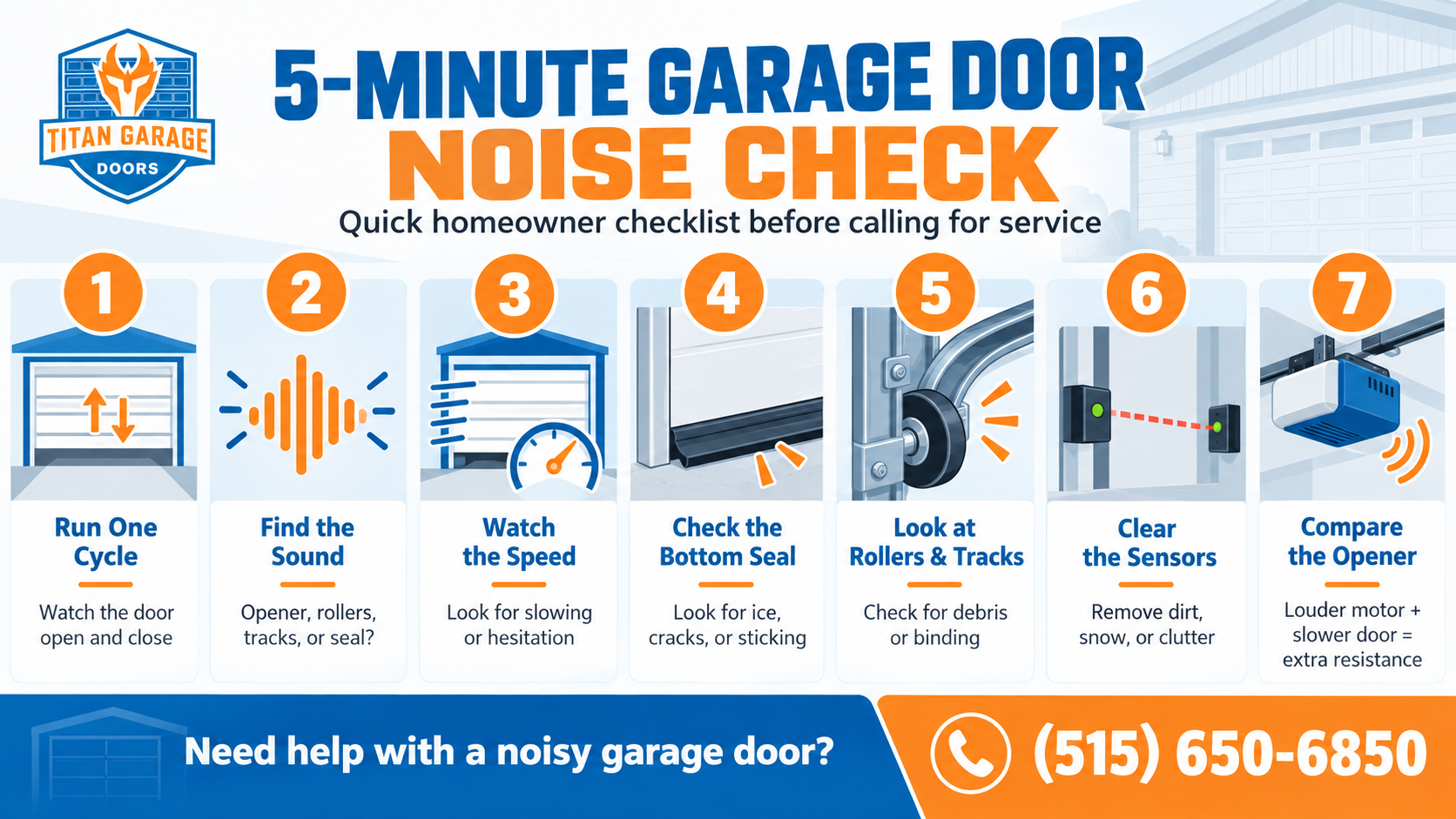
Do This 5-Minute Check Before You Call for a Garage Door Service
You do not need tools or technical experience to gather useful clues. A quick visual and sound check can help you narrow down where the noise starts and whether the door is still moving normally.
- Open and close the door once. Watch the full cycle from a safe distance and note any shaking, hesitation, or uneven lifting.
- Listen for where the noise starts. Pay attention to the opener, rollers, hinges, tracks, and bottom seal. A sound that repeats in the same spot can help narrow down the cause.
- Watch the door speed. Notice whether the door slows down, pauses, or moves differently on one side.
- Check the bottom seal. Look for ice, cracking, stiff rubber, or areas where the seal sticks to the floor.
- Inspect the tracks and rollers visually. Look for debris, a roller that appears to bind, or anything that seems out of position. Do not touch moving parts.
- Clear the sensor area. Remove snow, dirt, boxes, or other objects near the photo-eye sensors.
- Compare the opener sound with the door movement. If the motor gets louder while the door also moves more slowly or unevenly, the opener may be working against extra resistance.
Write down what you notice before scheduling service. Details such as where the sound starts, when it happens, and whether the door movement changes can help the technician diagnose the problem faster.
What Not to Do When Your Garage Door Gets Noisy
Once you finish the quick noise check, the next step is knowing what not to adjust on your own. Some noises come from simple maintenance issues, but others involve high-tension parts or alignment problems that can get worse if you try to force a fix.
Avoid:
- Spraying lubricant over every component
- Packing grease into the tracks
- Adjusting springs
- Tightening or moving cables
- Forcing a frozen door open
- Bending tracks back into position
- Increasing opener force to push through resistance
- Repeatedly running a door that grinds, jerks, or struggles
If the sound comes with a change in movement, treat that as the more important warning sign. A louder door is annoying, but a door that also slows down, shakes, or moves unevenly may need a closer inspection before you keep using it.
When a Garage Door Getting Louder Needs Professional Service
A little seasonal squeaking may only require maintenance. Noise combined with changes in operation deserves a closer look.
Schedule a garage door inspection when:
- Grinding continues through the cycle
- Scraping happens at the same point every time
- The door shakes or jerks
- One side rises differently
- The opener suddenly sounds strained
- The door feels heavier
- A roller binds in the track
- A cable looks damaged
- You hear a loud pop or bang
- Lubrication does not improve the noise
If you are unsure whether the system needs routine maintenance or a closer safety check, read our previous guide, Garage Door Tune-Up vs Safety Inspection: What Is the Difference? It explains when preventive care is appropriate and when inspection should come first.
FAQs About Garage Door Noise in Cold Weather
Why is my garage door louder in the morning but quieter later in the day?
Cold overnight temperatures can make seals and some moving components less flexible. As the garage warms during the day, the noise may become less noticeable. If the same sound returns every cold morning, have the system checked rather than assuming temperature alone is responsible.
Can the garage door material affect how much noise I hear in cold weather?
Yes. Different door designs and materials can transmit vibration differently, and loose sections or hardware may make that vibration more noticeable. The source of the sound still matters more than the door material alone, so unusual noise should be traced to the component causing it.
Should I schedule service if the noise disappears when the weather warms up?
It can still be worth checking. A sound that repeatedly appears only during colder weather in Des Moines may reveal developing friction, aging seals, or wear that becomes less noticeable when temperatures rise. Seasonal symptoms can provide an early warning before the problem becomes constant.
Get a Noisy Garage Door Checked in Des Moines
If your garage door gets louder as temperatures fall, Titan Garage Doors Des Moines can inspect the system and determine what is creating the noise. We check the rollers, hinges, tracks, springs, cables, balance, opener, safety components, and weather seals before recommending maintenance or repair. That way, the service addresses the source of the problem instead of just trying to make the door quieter.
Before scheduling, you can also check our discounts and offers for current savings that may be available on garage door service or repairs.
Call Titan Garage Doors Des Moines at (515) 650-6850 to schedule expert garage door repair in Des Moines before a noisy system turns into a winter breakdown.