
 15 YEARS OF SERVICE

Your garage door opener should move the door smoothly without sounding like it is fighting for every inch. When the motor becomes louder, the door starts moving slowly, or the system stops halfway, you may be dealing with garage door opener strain.
At first, the problem may seem minor. You might press the remote again and continue with your day. However, an opener that keeps working under extra pressure can wear out much faster. It may also leave your garage door stuck when you need to leave for work, pick up the kids, or head across Des Moines for an appointment.
So, how can you tell when your opener is working harder than it should? Let’s look at the most common warning signs homeowners often notice first.
Common Signs of Garage Door Opener Strain
Most openers show warning signs before they fail. Paying attention to changes in sound, speed, and movement can help you catch trouble early.
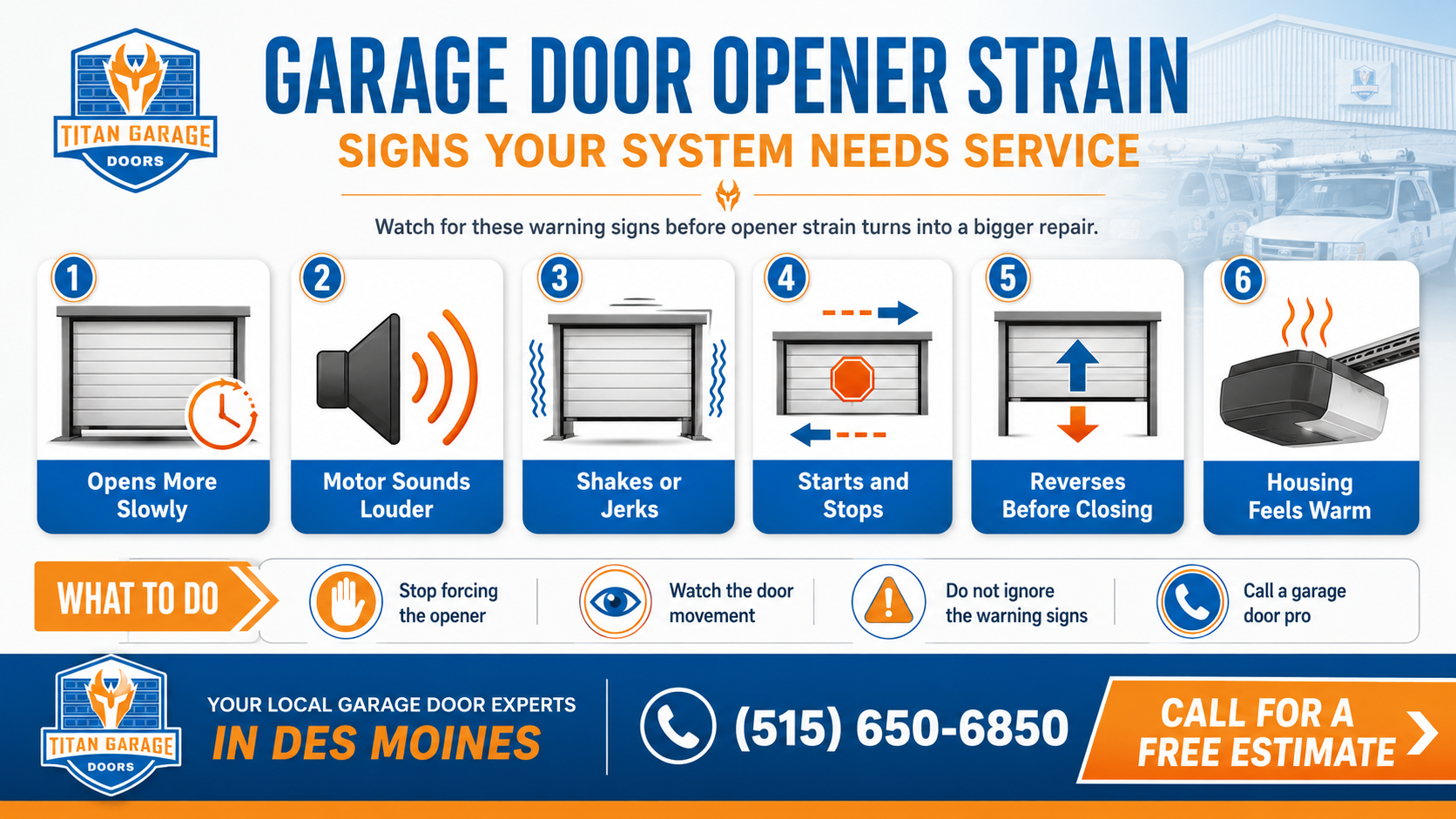
Your Garage Door Opens More Slowly Than Usual
A slow garage opener often provides one of the clearest signs of strain. Garage doors do not open instantly, but the movement should remain steady. If the door used to open smoothly and now seems to crawl upward, something has changed. The opener may struggle against worn rollers, a tight track, weak springs, or extra door weight. Additionally, an older motor may also lose strength over time.
Watch the door during a full opening cycle. Does it slow down in certain areas? Does it pause before moving again? These details can help a certified technician locate the source of the resistance.
The Opener Motor Sounds Louder
Every opener makes some noise. However, grinding, buzzing, humming, or unusually heavy motor sounds deserve attention. You may hear the motor running harder while the door barely moves. In some cases, the opener continues humming even after the door stops. This usually means the motor receives power but cannot move the door properly.
Do not keep pressing the remote when this happens. Repeated attempts may overheat the motor or damage internal opener parts. A louder sound does not automatically mean you need a new opener. Sometimes, correcting the door balance or replacing worn rollers removes the extra pressure.
The Door Shakes or Jerks While Moving
A healthy garage door should travel with controlled, even movement. It should not shake, jump, or jerk along the tracks. Shaking can happen when rollers wear unevenly or struggle to turn. Loose hinges may also cause sections of the door to move out of rhythm. As a result, the opener must repeatedly pull against changing resistance.
You may notice this problem more easily from inside the garage. Stand at a safe distance and watch both sides of the door. One side may move smoothly while the other side hesitates. Never place your hands near the tracks, rollers, cables, or springs while the door moves.
The Opener Starts and Stops
Does your garage door move a few feet and then stop? Does it continue after you press the remote again? Stop-start operation often points to resistance, an overheating motor, or a problem with the opener’s force settings. The system may sense that the door requires too much effort and stop as a safety response.
Several issues can create this symptom, so adjusting the opener settings without an inspection may hide the real problem. If the springs or rollers caused the resistance, increasing the opener force can place even more stress on the motor. When this happens, always call for an emergency garage door service in Des Moines.
The Door Reverses Before It Fully Closes
A garage door that reverses may have dirty or blocked safety sensors. However, physical resistance can also trigger the reversal. The opener monitors how much force it needs to move the door. When the door binds in the tracks or encounters a damaged roller, the opener may treat that resistance as an obstruction.
First, check whether an object blocks the doorway. You can also look for dirt on the sensor lenses near the bottom of the tracks. If the area looks clear and the door still reverses, schedule a professional inspection.
The Opener Housing Feels Unusually Warm
Garage door opener motors create some heat during operation. Still, the opener should not become extremely hot after one normal cycle.
Frequent use can make the motor run warmer, especially during hot Des Moines summers. Families who use the garage as their main entrance may open and close the door many times each day. When an older opener already works against a heavy or poorly balanced door, summer heat can add even more stress. A hot smell, smoke, or electrical odor requires immediate attention. Stop using the opener and contact a garage door expert.
Once you recognize the warning signs, the next step is understanding what may be placing extra pressure on the opener.
What Causes Garage Door Opener Strain?
The opener may make the noise or show the slowdown, but it is not always the part creating the problem. Several connected garage door components can increase resistance and force the motor to work harder.
Weak or Damaged Garage Door Springs
Garage door springs support most of the door’s weight. When a spring weakens or breaks, the opener may try to lift a door that feels much heavier than normal.
This extra weight can cause slow movement, loud motor sounds, or stop-start operation. You may also see a visible gap in a torsion spring above the door. However, never touch, adjust, or test a garage door spring yourself. Springs hold strong tension and can cause serious injuries. Always call for a garage door spring repair.
Worn Garage Door Rollers
Rollers help the garage door travel smoothly through the tracks. Over time, they can crack, flatten, rust, or stop turning freely. Damaged rollers create friction during every opening and closing cycle. As a result, the opener must pull harder to keep the door moving. You may hear squeaking, scraping, popping, or rattling near the sides of the door.
Poor Garage Door Balance
A properly balanced garage door should move evenly without placing most of its weight on the opener. Weak springs, uneven spring tension, or worn hardware can cause the door to become unbalanced. One side may rise faster than the other, or the door may feel unusually heavy. The opener then carries more weight than it was designed to handle.
Because balance problems often involve the spring system, a trained and certified technician should inspect and test the door.
Bent Tracks or Loose Hardware
Garage door tracks guide the rollers as the door moves. Even a small bend or alignment problem can create resistance at one point in the opening cycle. Loose hinges, brackets, or bolts can also allow the door sections to shake and shift. You may notice that the door moves smoothly at first, then jerks or slows down in the same area each time.
Continuing to use the door can place more strain on the opener and worsen the damaged hardware.
An Aging Garage Door Opener
Garage door opener motors and internal parts naturally wear down after years of daily use. An older motor may become louder, slower, or more sensitive to minor resistance. Summer heat can make the problem more noticeable. Many Des Moines homeowners use the garage as their main entrance, which means the opener may run several times each day. Hot weather and frequent cycles can place added stress on an already worn motor.
However, an older opener does not automatically need replacement. A professional inspection can determine whether garage opener repair Des Moines will solve the issue or whether installing a newer system offers better long-term value.
Safe Ways to Check for Garage Door Opener Strain
You can check for several signs of garage door opener strain without touching springs, cables, or other dangerous parts. Stay at a safe distance and focus on how the door sounds and moves.
- Watch the door complete one full cycle.
- Listen for unusual sounds.
- Notice where the door slows down.
- Check the tracks for visible obstructions.
- Look at the safety sensors.
- Check for heat or unusual smells.
- Avoid adjusting the opener force or springs.
These simple checks can help you describe the problem more clearly, but they do not replace a professional inspection. A trained technician can determine whether the strain comes from the opener, rollers, springs, tracks, or door balance.
When Should You Call for Garage Opener Repair in Des Moines?
Schedule a garage door service when the opener repeatedly slows down, strains, shakes, stops, or reverses. You should also call when the motor becomes unusually loud or hot. Do not wait for the opener to stop completely. A small roller or balance issue may turn into motor damage when the system continues working under pressure.
At Titan Garage Doors Des Moines, we inspect the complete door system instead of focusing only on the opener. We check the springs, rollers, tracks, hinges, balance, safety sensors, and motor performance. This approach helps us identify what actually causes the garage door opener strain.
Whether you live near Beaverdale, the Drake neighborhood, Waveland Park, the East Village, or another part of the Des Moines area, regular garage door use can expose worn parts quickly. Summer heat and frequent daily cycles can place even more pressure on an older system.
Stop Garage Door Opener Strain Before It Leads to a Breakdown
A strained garage door opener will not fix itself, and continued use can turn a small roller, spring, or balance problem into a larger repair. If your door moves slowly, shakes, stops midway, or makes louder motor noises, let Titan Garage Doors Des Moines inspect the full system and find the real cause.
Our certified technicians check the opener, springs, rollers, tracks, hinges, and door balance before recommending a repair. We explain what we find clearly, so you can make the right decision without guesswork.
Call Titan Garage Doors Des Moines at (515) 650-6850 to schedule a free estimate on professional opener repair in Des Moines and help your garage door move smoothly again.